ICSA Learning Series · Module 1
Module 1: Essential Newborn Care
Covers the critical first days of life, equipping frontline health workers with expert-led, practical knowledge on newborn care, from birth through the first weeks of life.
About this module
Covers the critical first days of life, equipping frontline health workers with expert-led, practical knowledge on newborn care, from birth through the first weeks of life.
- Sessions: 7 recorded sessions
- Facilitators: Dr Beatrice Ezenwa (Lagos University Teaching Hospital) · Prof Zubaida L. Farouk (Bayero University Kano)
- Certificate of participation: attend the required share of the module's sessions and complete the pre- and post-session assessments.
Sessions
Watch the sessions
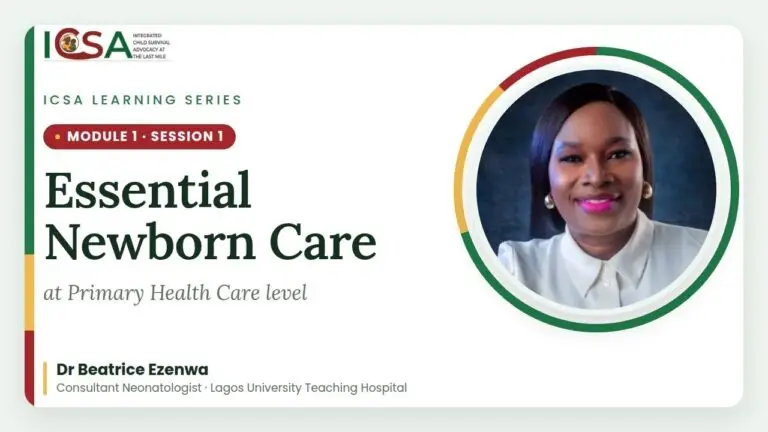
Module 1 · Session 1
Dr Beatrice Ezenwa
Most newborn deaths happen in the first week of life, and most of them in primary health centres and homes. This session walks frontline health workers through the six essential steps that give every baby the best start.
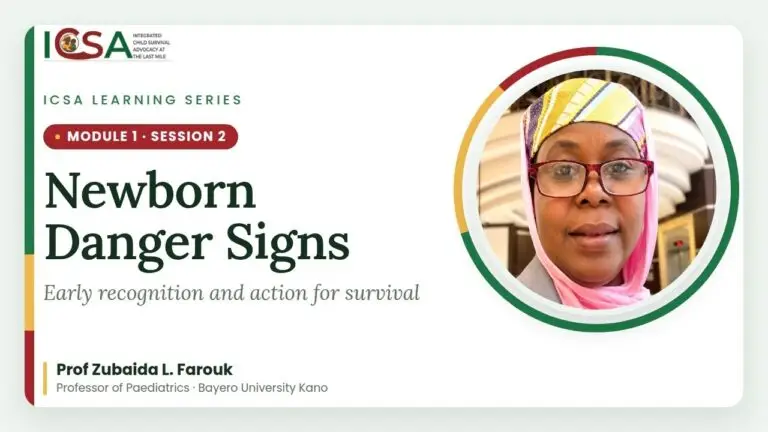
Module 1 · Session 2
Prof Zubaida L. Farouk
A sick newborn can deteriorate in hours. Knowing the danger signs, and acting on them at the first facility or community contact, is one of the most powerful things a PHC worker can do.
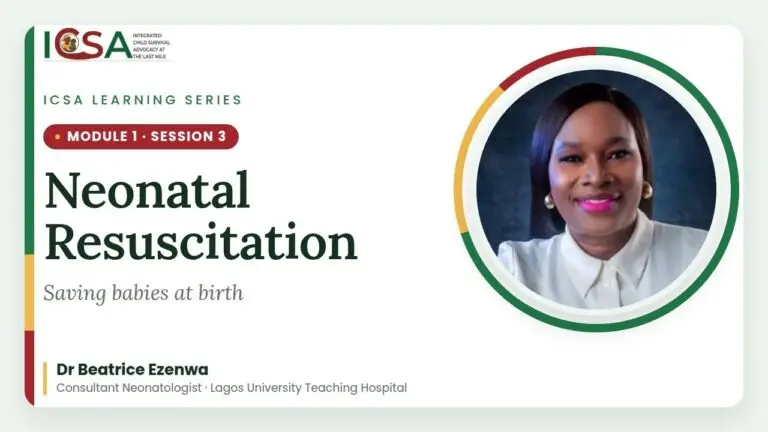
Module 1 · Session 3
Dr Beatrice Ezenwa
About one in ten newborns needs help to start breathing. In a primary health centre the person in the room is often the only skilled attendant. This session is about being ready for that moment.
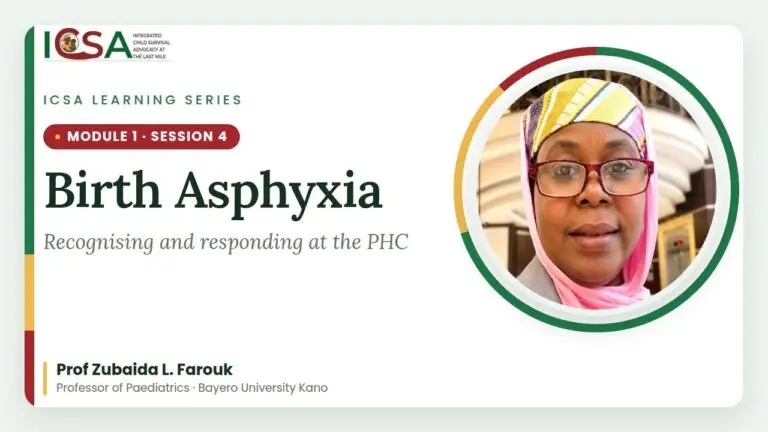
Module 1 · Session 4
Prof Zubaida L. Farouk
Birth asphyxia, a baby failing to start or keep breathing at birth, is one of the leading causes of newborn death, and the burden falls heavily on primary health centres. Most affected babies need only simple, timely steps.
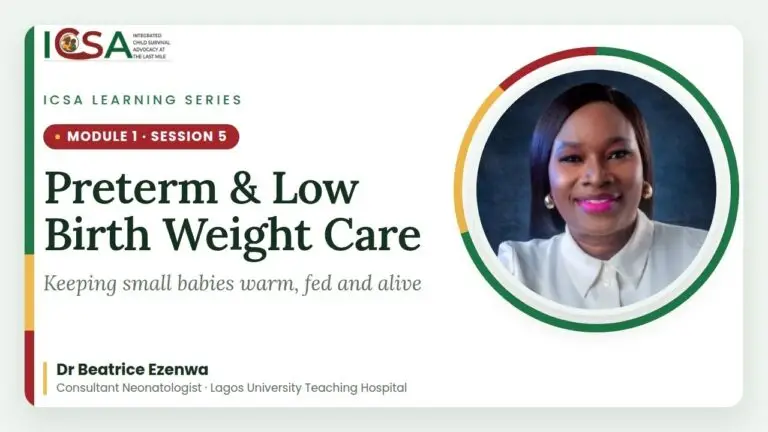
Module 1 · Session 5
Dr Beatrice Ezenwa
Nigeria has one of the highest numbers of preterm births in the world, and many small babies die within days of problems that are preventable with warmth, feeding and timely referral.
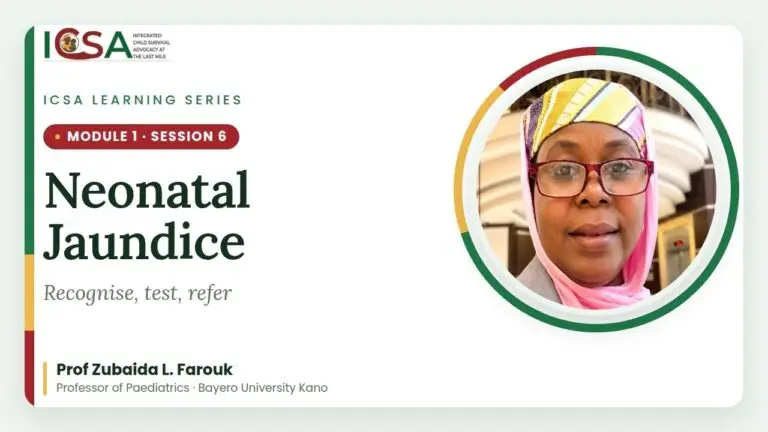
Module 1 · Session 6
Prof Zubaida L. Farouk
Jaundice is common in newborns and usually harmless, but at high levels it causes permanent brain damage. Nurses and midwives at the PHC are the key to catching it early.
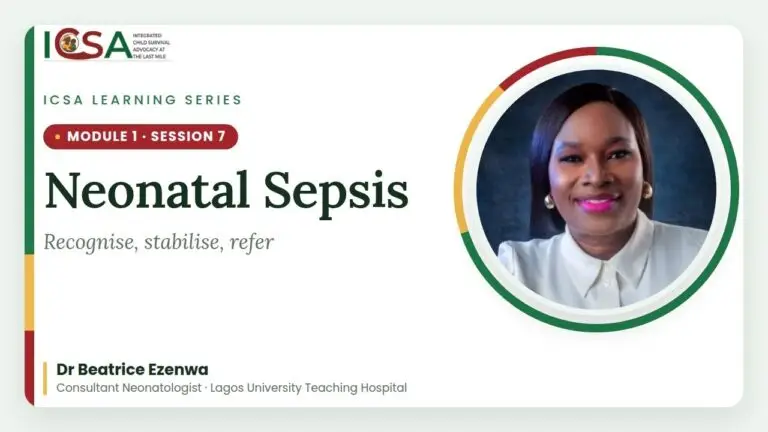
Module 1 · Session 7
Dr Beatrice Ezenwa
A newborn who is not feeding, is warm to touch or has stopped moving normally may have sepsis, a blood infection that can kill within hours. This session is about recognising it fast and acting at PHC level.
Questions about the Learning Series?
Contact the ICSA secretariat about registration, certificates or session materials.